
A discreet, clinician-led approach to intimate skin — addressing dryness, laxity, hyperpigmentation, and the everyday irritation that nobody wants to mention in a waiting room.

Skin health doesn’t stop at the jawline. The skin of the intimate area is some of the thinnest, most reactive tissue on the body — affected by hormones in ways the face simply isn’t, repeatedly stressed by friction and shaving, and rarely given the same kind of medical attention as the rest of the skin you wear in public.
Most of what people privately worry about — dryness, dullness, darker patches, a loss of elasticity — can be addressed, calmly and clinically.
Intimate skin health work at Restart Medical is a small family of treatments that share a single approach: care for this tissue with the same evidence-led tools we use on the face. Hydration boosters. Polynucleotide rejuvenation. Gentle, area-appropriate peels. Plasma-based regeneration. Each protocol is built around the specific concern, not sold from a menu.
What “intimate skin health” looks like in practice depends on what brought you in. For dryness or thinning, we typically use hyaluronic acid hydration boosters or polynucleotides to restore moisture-binding capacity. For hyperpigmentation in the groin or perianal area, we use area-appropriate peels and brightening protocols. For laxity, regenerative injectables and PRP. For sensitivity, calming polynucleotide protocols.
A consultation maps your specific concern to the right combination — with a clear treatment plan, a clear price, and the ability to step in and out of the protocol as your body responds.
Intimate skin is not the place for off-the-shelf protocols or non-medical hands. Here’s how we’re structured.
Every intimate skin treatment is performed by a registered medical professional — never delegated to a non-medical aesthetician.
The treatment is selected for your concern. We don’t sell a single intimate package and bend everything into it.
Only CE-marked, batch-traceable hydration boosters, polynucleotides, and peel formulations with documented intimate-area use.
Topical anaesthetic is applied and given full time to take effect before any needle or peel application.
Strengths are adjusted downward for intimate skin compared to facial protocols. Less aggressive, more iterative.
Soundproofed, dedicated rooms with no shared corridor traffic — the kind of privacy intimate appointments require.
Barnsley and London. Choose the site that works for your travel and your level of confidentiality preference.
You see the same clinician across the course of sessions. No assistant hand-offs, no new face every visit.
From a private first conversation through to a settled outcome — a calm, unhurried path.
A private, unhurried conversation about what’s changed, what’s bothering you, and what you’d like to address. Medical history and area-specific assessment are completed in a closed room.

Based on your specific concern — dryness, pigmentation, laxity, sensitivity — we map a tailored course. Products, sessions, spacing, and expected timeline are all written down.
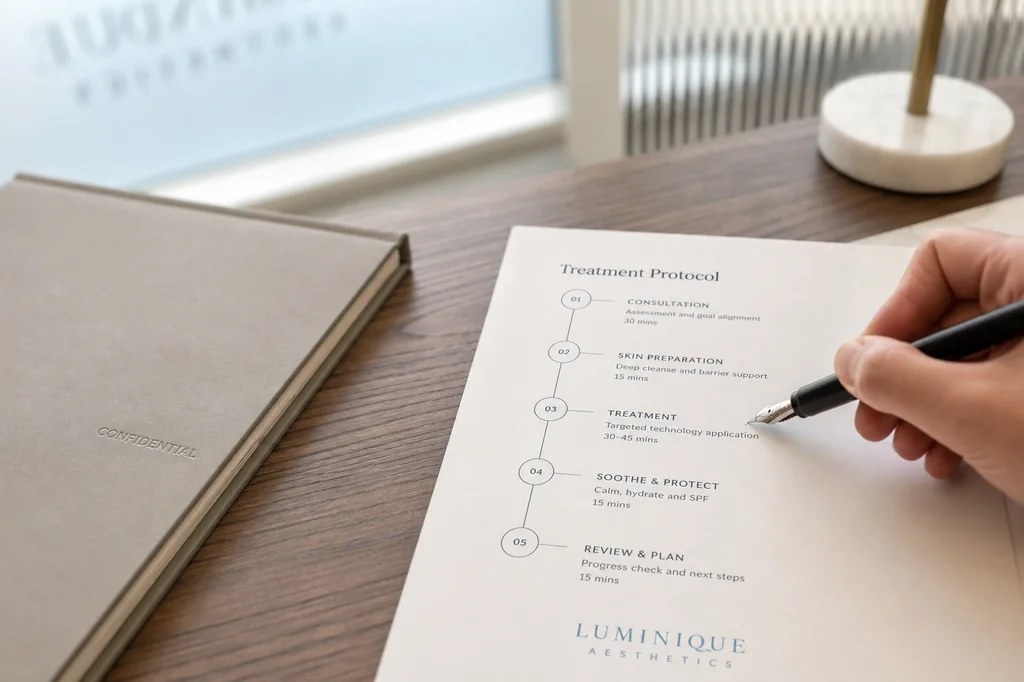
A medical-grade numbing cream is applied to the treatment area and given the full time required to take effect — typically 20 to 30 minutes — before anything else begins.

Whether that’s a hydration booster, polynucleotide injection, gentle peel, or PRP application, the protocol is delivered with continuous communication and pauses at any point you need.

A calming serum is applied; the area is cooled if needed; you’re given the space to dress in privacy. We confirm aftercare verbally and in writing before you leave the room.
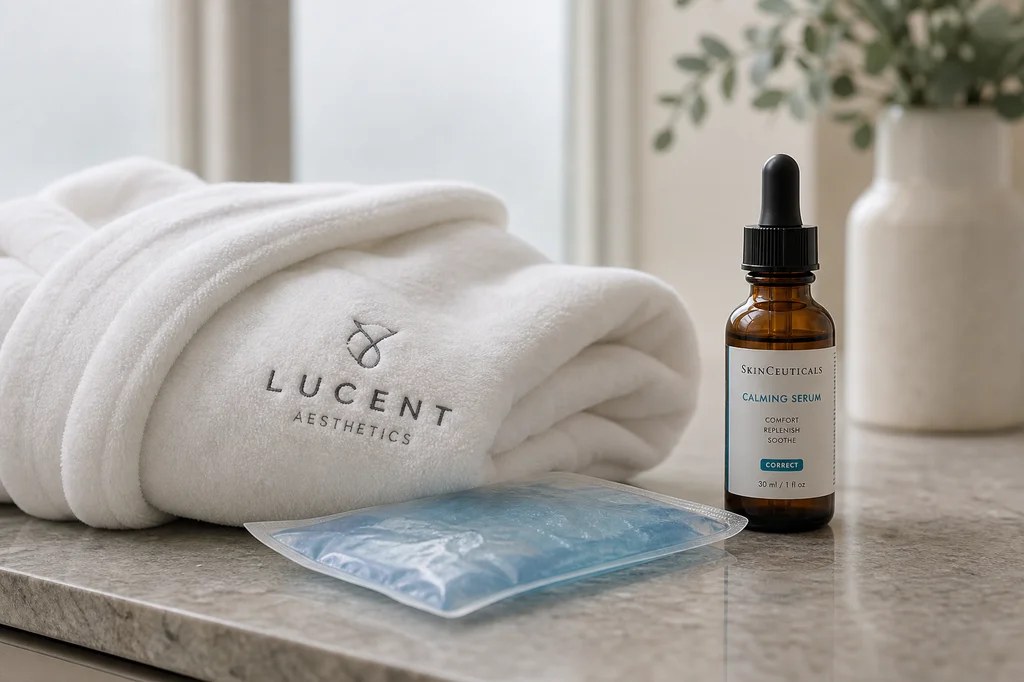
Your next session is booked at the right interval and you leave with a direct contact line. After the course, we’ll set a maintenance pattern that holds the result without over-treating.

Often the first change clients notice — the area feels less dry, less reactive, and less aware of itself through the day.
Friction and shaving irritation often quieten as the skin’s barrier and moisture capacity are restored across the course.
Where pigmentation was the concern, the gap between darker and lighter areas typically softens gradually across sessions.
Where laxity was the issue, the tissue commonly feels firmer and looks subtly tighter as regenerative work takes effect.
For clients treating menopause-related changes, the most consistent feedback is a return to feeling like the body is theirs again.
Once the initial course is complete, most clients keep results stable with one or two short top-up sessions per year.
Intimate skin work demands a particular kind of care. Here’s how we keep your sessions both safe and quietly handled.
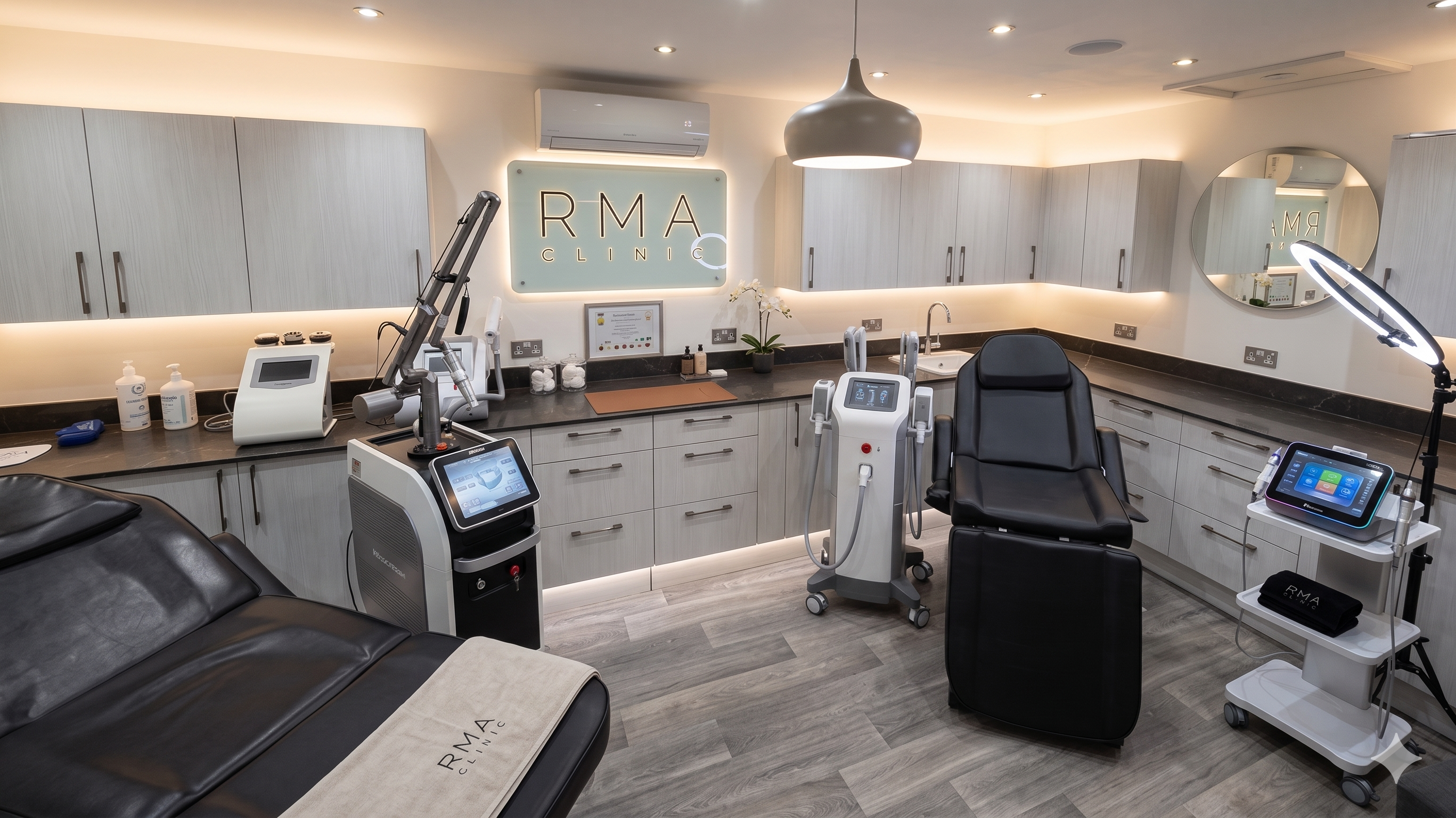
All intimate skin work is performed by a registered medical professional with documented training in intimate-area care.
Only CE-marked, batch-traceable hydration boosters, polynucleotides, peels, and PRP kits with intimate-area suitability are used.
Strengths and depths are scaled down for intimate skin compared to facial work — less aggressive, more measured.
Consent, hygiene, and clinical record-keeping aligned with UK CQC standards across both clinic sites.
You may be a good candidate if you:
A strong topical anaesthetic is applied and given full time to take effect before any treatment begins. Most clients describe the experience as a mild pressure or warmth rather than pain. We pause whenever needed.
Common concerns include dryness and discomfort, hyperpigmentation in the groin or perianal area, loss of elasticity, friction-related irritation, and menopause-related changes in tone and texture.
Most courses run two to three sessions, spaced four to six weeks apart, followed by light yearly maintenance. The exact number is mapped at consultation based on your specific concern.
Improvements in comfort and hydration are often noticed within the first one to two weeks. Visible changes in tone or elasticity typically appear across sessions two and three.
Most treatments have minimal downtime. There may be mild redness, swelling, or sensitivity for 24 to 72 hours. We ask you to avoid hot baths, saunas, intense exercise, and intimacy for a few days — the exact period depends on the protocol used.
Absolutely. Consultations take place in a soundproofed private room, with notes stored under GDPR-compliant medical records. You can request a same-sex clinician where preferred.
Yes — in fact, many of our clients are. Intimate skin treatments often complement HRT well, as they address the structural skin changes that HRT alone may not fully reverse.
No. The treatments work on the skin itself rather than systemic hormone levels. We’ll still review your full medication and supplement list at consultation as a matter of routine.
Pricing depends on the specific protocol and number of sessions. We provide fixed, transparent pricing at consultation with no upsells — you’ll know the cost in full before anything is booked.
Simply book a confidential consultation or call 07506 689894. We’ll arrange a private appointment at the location that works for you.
If something has been quietly bothering you, a single confidential consultation is enough to tell you what’s causing it and what realistically can — and can’t — be done about it.
Submit your details below and a member of our team will be in touch privately to arrange your confidential assessment.
Prefer to talk? Call 07506 689894 or email info@restartmedical.co.uk.
Medical Policy & Disclaimer: The content on this page is for informational purposes only and does not constitute a medical offer. Intimate skin health treatments — including hydration boosters, polynucleotides, intimate peels, and PRP — are non-surgical aesthetic procedures. Results vary by individual and are not guaranteed; degree and durability of response depend on your concern, tissue characteristics, hormonal status, and adherence to the recommended course and maintenance. Suitability must be assessed by a qualified clinician during a confidential consultation. Restart Medical & Aesthetics Clinic operates in line with UK ASA/CAP advertising standards and CQC-aligned clinical hygiene and consent protocols.