
Regenerative treatments that remodel old scar tissue and stretch marks — softening texture, evening tone, and helping the surface blend back with the skin around it.

Scars and stretch marks aren’t just skin. They’re records — of an operation, a fall, a teenage growth spurt, a pregnancy, a long bout of acne. The body knits the wound closed quickly, but it doesn’t always knit it neatly. The fibres lay down in the wrong direction, the pigment lands unevenly, and what’s left behind is a patch of skin that doesn’t quite match the surface around it.
Scar reduction isn’t about erasing the past. It’s about helping the skin finish a healing process it never quite got to complete.
At Restart Medical, we use regenerative treatments — microneedling, polynucleotides, and selective fillers — to prompt the body to break down old, disorganised scar tissue and replace it with fresh, well-aligned collagen. The result, across a structured course, is texture that softens, tone that evens, and skin that no longer announces what happened to it.
Scar reduction at our clinics is built around regenerative medicine, not camouflage. Depending on the type of scar, your treatment may combine controlled medical microneedling (which prompts new collagen growth), polynucleotide injections (which repair cell function at a deeper level), and small amounts of dermal filler to lift depressed scars to the level of the skin around them.
Each modality targets a different layer and a different problem. Your plan is built around the scar itself — its age, depth, location, and how it has matured — not a one-size-fits-all protocol.
Scar reduction sits at the intersection of medical and aesthetic. Here’s how we’re set up to do it properly.
Medical-grade depth control, not the shallow cosmetic version sold in beauty salons.
Repairs cells at a deeper level — one of the strongest tools in modern regenerative aesthetics.
We combine modalities where it helps — rather than forcing every scar into the same treatment.
You’ll get a realistic forecast at consultation — not a promise of total erasure.
Protocols adapted for Fitzpatrick types to minimise the risk of post-inflammatory pigmentation.
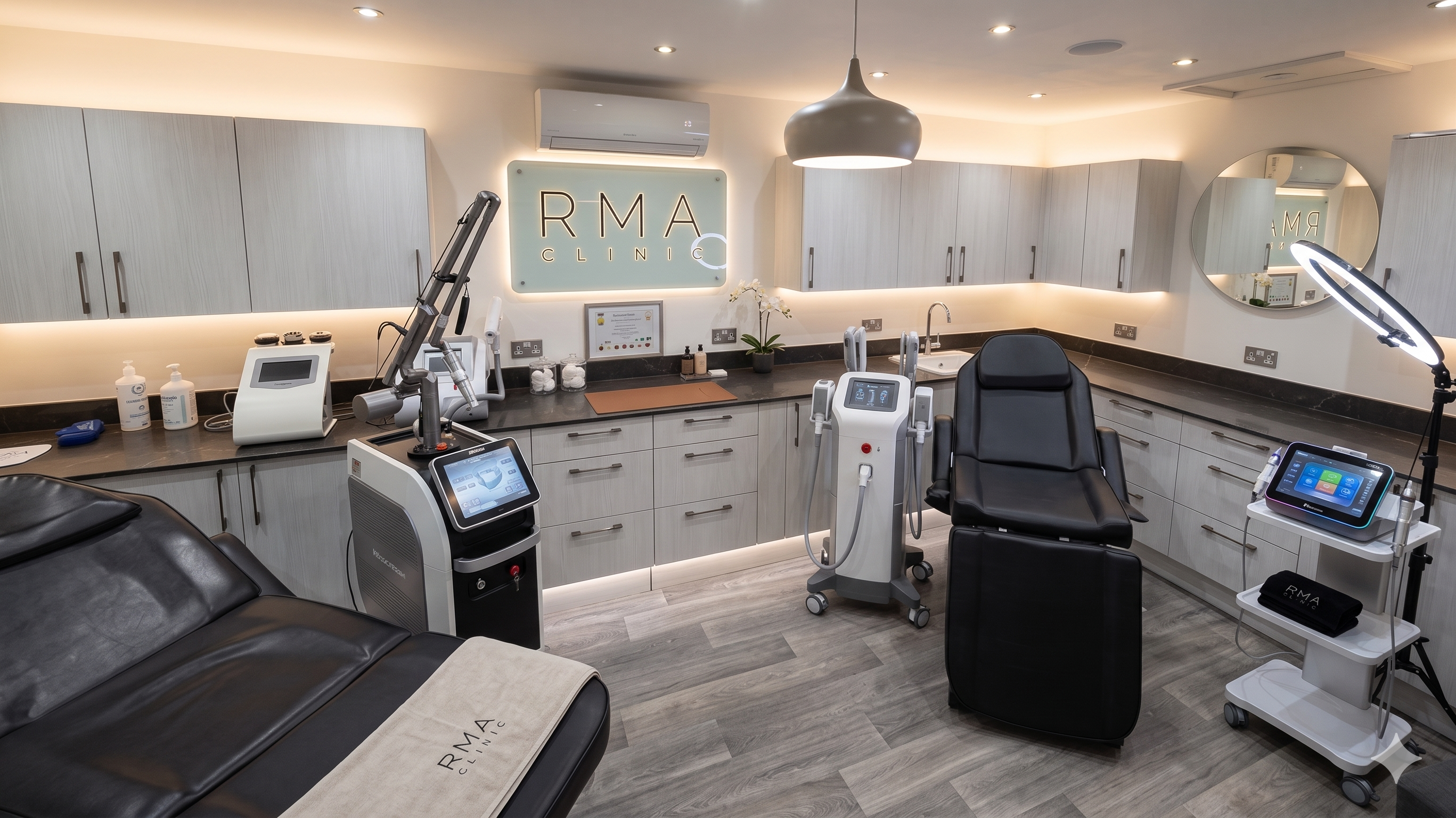
Private rooms for body, face, and intimate scars. Same clinical standards across every area.
Clinics in Barnsley and London. Book whichever fits your schedule.
Direct access to your practitioner between sessions for any questions or concerns.
From first consultation to long-term review — a clear path, no surprises.
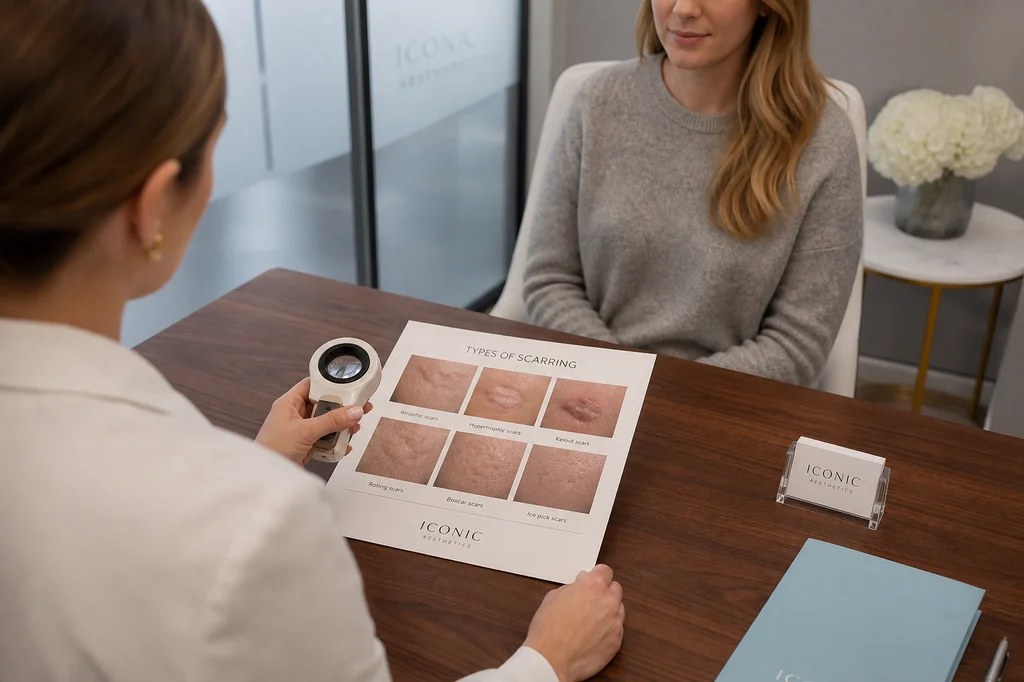
We examine the scar in person — its age, depth, colour, and whether it sits raised, flat, or below the surrounding skin. We then map the right combination of modalities and the realistic outcome you can expect.
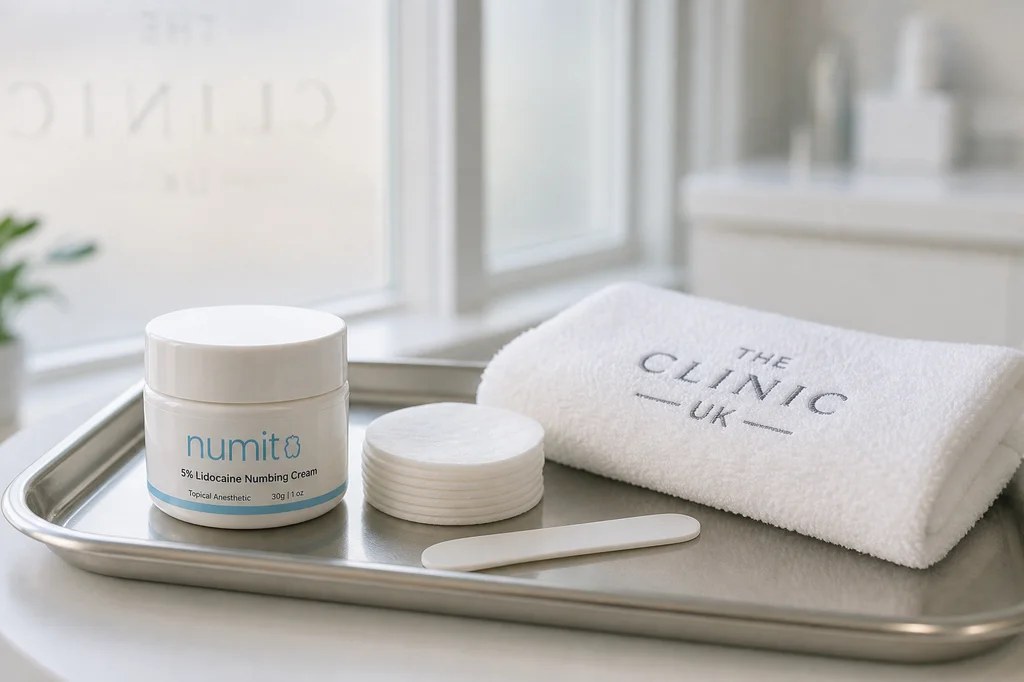
The area is cleansed and a topical numbing cream applied for around 20–30 minutes so that the treatment itself is comfortable.
Depth, density, and technique are dialled in for the scar in front of us. For an atrophic acne scar, that may mean deep microneedling. For a stretch mark, polynucleotides. For a depressed surgical scar, a tiny lift of filler.
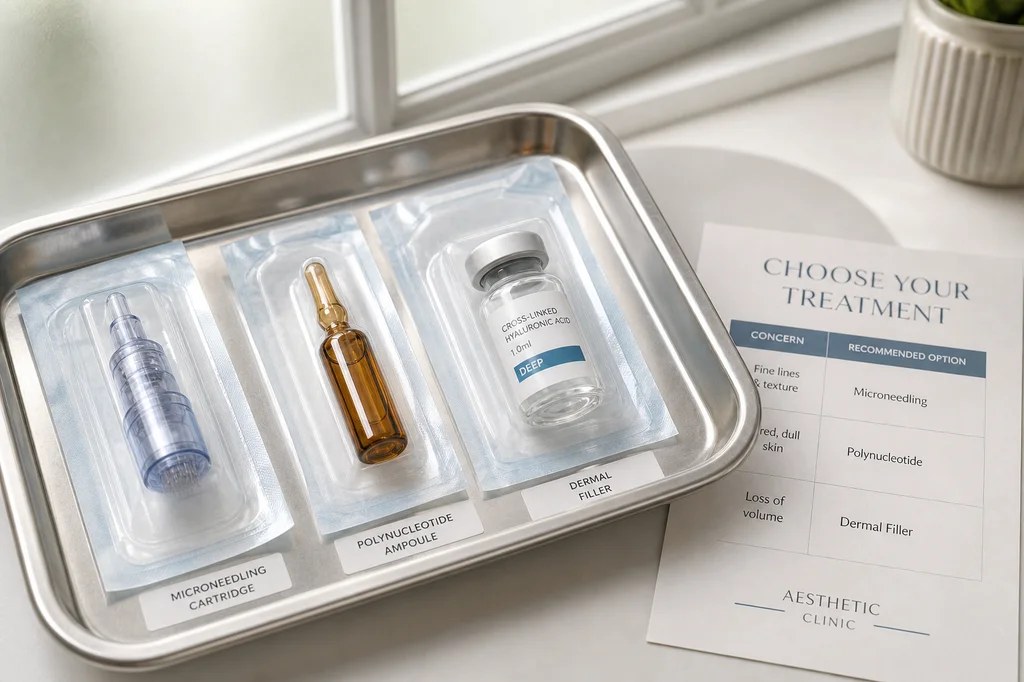
The chosen modality is delivered with full clinical hygiene and consent. Most clients describe the sensation as pressure with occasional prickling — the numbing handles most of the discomfort.

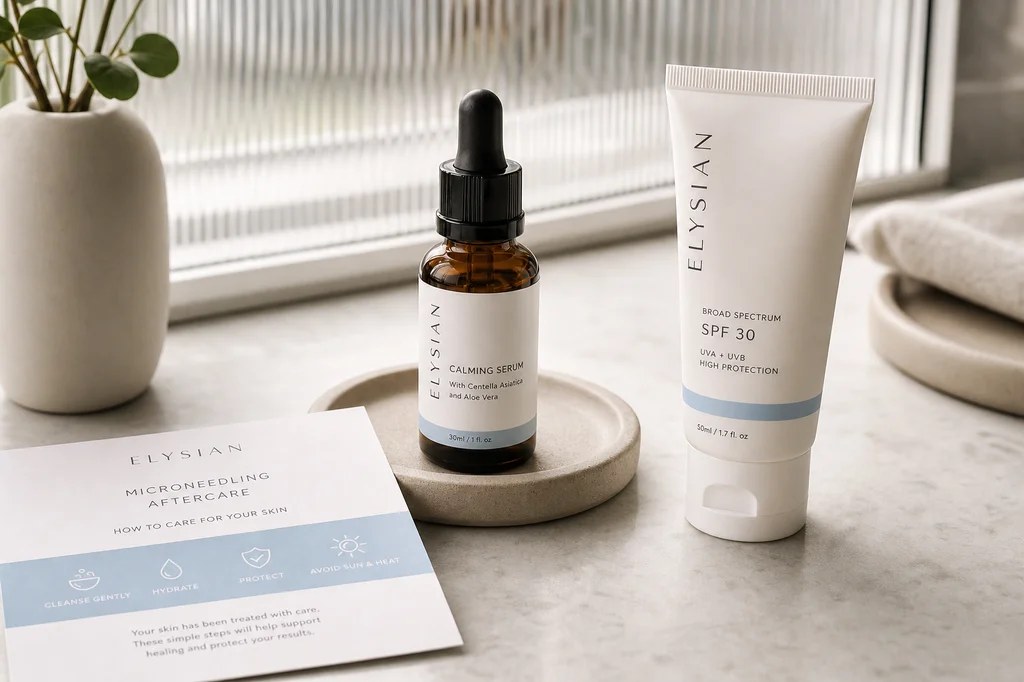
A calming serum and SPF are applied. You leave with a printed aftercare plan covering sun protection, cleansing, and what is and isn’t normal in the days that follow.
Your next visit is booked at the right interval for the scar to remodel before we treat again. You have direct contact with your practitioner in between for any questions.
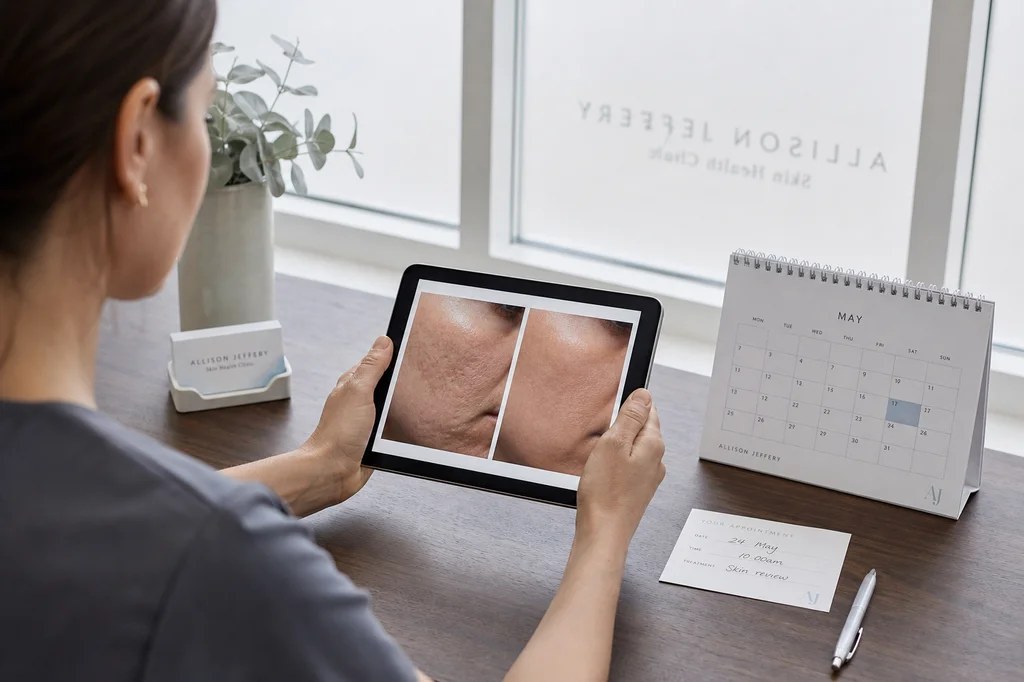
The first change most clients notice is texture — the scar starts to feel less raised, less indented, or simply less defined to the touch.
Pigmentation tends to settle as the surrounding skin and the scar tissue start to behave more like one continuous surface.
Older, fibrous scars can pull and tighten the surrounding skin. New collagen helps the area move more naturally.
A realistic goal is that the scar fades into the skin rather than disappearing entirely — quieter, not gone.
Many clients say the difference shows up in what they wear — lower necklines, short sleeves, swimwear — rather than only what they see in the mirror.
Once a course is complete, most clients return for an optional annual review and a single top-up session if needed.
Regenerative scar treatments are well established. Here’s what we do to make sure your sessions are as safe as they are effective.
For deeper protocols or sensitive skin types, we run a small test area before progressing to the full treatment.
Depth and energy are tuned to your Fitzpatrick type to reduce the risk of post-inflammatory hyperpigmentation.
Needles, cannulas, and consumables are sterile single-use across every modality, every session.
Hygiene, consent, and clinical record-keeping aligned with UK CQC standards across both sites.
You may be a good candidate if you:
Honestly — no. Scar reduction is exactly that: a meaningful reduction in how visible, raised, or depressed a scar appears, and how much it pulls at the skin around it. The goal is for it to blend in rather than vanish.
We treat surgical scars, post-injury scars, acne scarring (rolling, boxcar, and ice-pick), and stretch marks (striae). Keloid and hypertrophic scars need a careful, often staged approach — we’ll discuss this fully at consultation.
A topical numbing cream is applied 20–30 minutes before the treatment. Most clients describe the sensation as a pressure or prickling rather than pain. Aftercare is usually mild redness, similar to sunburn, for 24–72 hours.
Most clients have between 3 and 6 sessions, spaced 4–6 weeks apart. Older or more fibrous scars may need additional rounds. We’ll give you a realistic forecast at consultation.
Yes, but you’ll need to be careful with sun exposure on the treated area. Daily SPF 50 is non-negotiable in the weeks after each session to prevent pigmentation issues.
Initial changes in texture often appear after the second or third session. Because scar remodelling is collagen-led, the most visible improvement typically continues for several months after the last session.
Most modalities leave the area looking pink and slightly swollen for 24–72 hours. You can return to work and most normal activities the next day — we recommend avoiding heavy gym sessions, saunas, and active skincare for a few days.
Yes — stretch marks respond particularly well to polynucleotides and medical microneedling. Older, white stretch marks are harder to shift than newer red/purple ones, but improvement is usually achievable.
Pricing depends on the size and number of areas treated, and which modalities are appropriate. We provide transparent, fixed pricing at consultation — no hidden fees, no surprise upgrades.
Simply book a consultation or call 07506 689894. We’ll assess your scar in person and map out a course that fits.
Whether your scar is from surgery, injury, acne, or a pregnancy — a structured course of regenerative treatment can change how it sits on your skin, and how often you think about it.
Submit your details below and a member of our team will be in touch to arrange your assessment.
Prefer to talk? Call 07506 689894 or email info@restartmedical.co.uk.
Medical Policy & Disclaimer: The content on this page is for informational purposes only and does not constitute a medical offer. Scar reduction at Restart Medical is a non-surgical regenerative aesthetic treatment. Results vary by individual, scar type, and adherence to the recommended course, and are not guaranteed; complete erasure of a scar is not the realistic objective of these protocols. Suitability must be assessed by a qualified clinician during a consultation. Restart Medical & Aesthetics Clinic operates in line with UK ASA/CAP advertising standards and CQC-aligned clinical hygiene and consent protocols.